

The Benefits of Strength Training for Beginners: A Guide to Building Muscle and Confidence
Strength training offers numerous advantages, especially for beginners looking to improve their fitness. Engaging in regular strength training not only enhances muscle tone and physical appearance but also boosts overall health and metabolic function. Many people may think that only experienced athletes benefit from lifting weights, but the truth is that everyone can gain significantly from incorporating these exercises into their routine.
For beginners, strength training is crucial for building a strong foundation. It promotes better posture, increases bone density, and reduces the risk of injury in daily activities. Moreover, this type of training can lead to improved endurance and enhanced athletic performance, whether for casual sports participation or more intense physical activities.
As individuals embark on their strength training journey, they will discover a greater sense of accomplishment and confidence. This pursuit not only transforms the body but also the mind, encouraging a more positive attitude towards health and fitness. Embracing these benefits can set the stage for a lifelong commitment to personal wellness.
Why Strength Training Matters for Beginners
Strength training is crucial for beginners aiming to improve their overall health and fitness. It offers numerous physical and mental health benefits while helping to build muscle mass and stronger bones. Additionally, it can boost metabolism and effectively burn calories.
Physical and Mental Health Benefits
Engaging in strength training can significantly enhance physical health by improving cardiovascular function and managing weight. Regular strength training contributes to better muscle strength, endurance, and flexibility.
Mentally, it supports mood enhancement and reduces symptoms of anxiety and depression.
The release of endorphins during exercise creates a sense of well-being. By incorporating strength training into a fitness routine, individuals can experience more energy and improved quality of life.
Building Muscle Mass and Stronger Bones
For beginners, gaining muscle mass is often a key goal. Strength training activates muscle fibres, leading to hypertrophy and increased muscle size.
Increased muscle mass provides lasting benefits, such as improved balance and coordination. This is particularly important as one ages.
Additionally, strength training is vital for building stronger bones.
It enhances bone density, reducing the risk of osteoporosis later in life. Engaging in regular resistance exercises helps to stimulate bone growth, thereby contributing to long-term skeletal health.
Boosting Metabolism and Burning Calories
Strength training plays an essential role in boosting metabolism. Muscle tissue requires more energy to maintain than fat tissue, meaning that increased muscle mass can lead to higher resting metabolic rates.
This results in more calories burned throughout the day, even at rest, supporting weight management goals.
Incorporating strength training into fitness regimens can also create an afterburn effect, where calories continue to be burned post-exercise.
This dual benefit of improved metabolic function and increased calorie expenditure makes strength training a powerful tool for beginners focused on weight control.
Essential Strength Training Exercises for Beginners
Incorporating fundamental strength training exercises can significantly enhance a beginner’s fitness journey. Key movements target major muscle groups and lay the groundwork for progression.
Squats and Lunges
Squats and lunges are foundational exercises for building strength in the lower body. Squats engage the quadriceps, hamstrings, and glutes, promoting muscle development and stability.
To perform a squat, stand with feet shoulder-width apart. Lower the body by bending at the knees, keeping the back straight and shoulders relaxed. Aim to lower until the thighs are parallel to the ground before returning to a standing position.
Lunges, on the other hand, target similar muscle groups while improving balance and coordination. A basic lunge begins from a standing position; take a step forward and lower the body until both knees are bent at 90 degrees. Alternate legs for balance.
Free Weights and Dumbbells
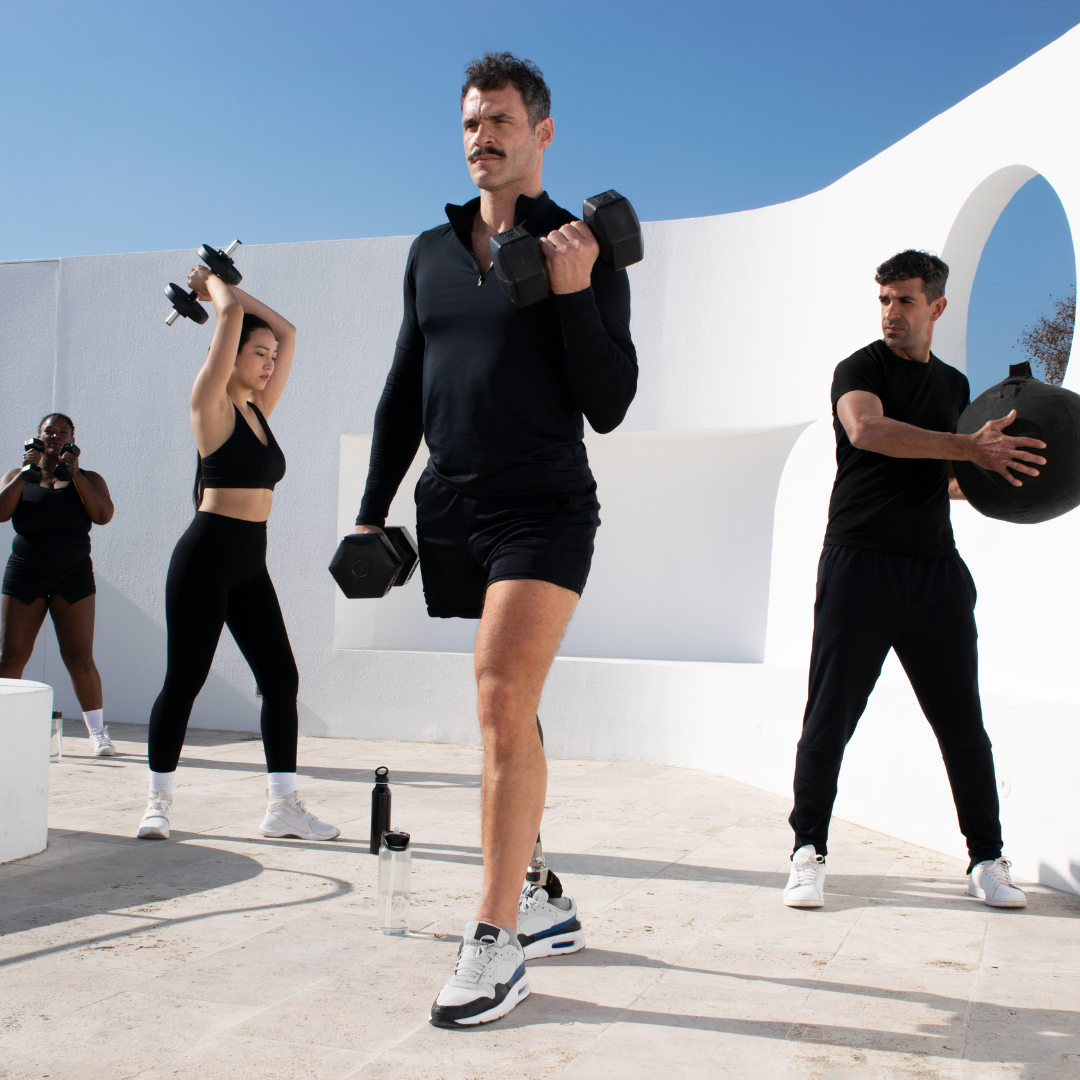
Using free weights, particularly dumbbells, allows for a versatile strength training regimen. They can be utilised for various exercises, targeting both upper and lower body muscles.
Common exercises include dumbbell presses, curls, and rows. For instance, a dumbbell shoulder press starts with weights at shoulder height, pushing upwards until arms are fully extended. This movement targets the deltoids and triceps effectively.
Free weights require stabilisation, enhancing core strength while performing exercises. Beginners should start with lighter weights to ensure proper form before gradually increasing resistance.
Using Resistance Bands and Weight Machines
Resistance bands are excellent tools for beginners, offering varied resistance levels. They are portable and can be used for a range of exercises, such as bicep curls and seated rows.
For effective use, secure the band underfoot or around a stationary object, pulling it with controlled movements to engage targeted muscles. This method reduces injury risk and improves flexibility.
Weight machines in gyms provide guided motion, which helps beginners maintain proper form. Machines typically isolate muscle groups, allowing targeted training. Users should adjust the machine settings to fit their body size for optimal results.
Kettlebells and Other Equipment
Kettlebells are another valuable resource for beginners, effective for full-body workouts. Their unique shape promotes dynamic movements like swings and snatches, engaging various muscle groups simultaneously.
For instance, the kettlebell swing targets the glutes, hamstrings, and core. To perform this exercise, hinge at the hips while swinging the kettlebell between the legs, then extend the hips to swing it forward.
Other equipment, such as stability balls and medicine balls, can enhance strength training routines. Incorporating these tools introduces variety and challenges stability, further developing core strength and control.
Creating a Safe and Effective Strength Training Routine
A well-structured strength training routine is essential for beginners to ensure safety and maximise benefits. Key aspects include maintaining proper technique, incorporating warm-ups and cool-downs, choosing appropriate repetitions and weights, and seeking professional guidance.
Proper Technique and Good Form
Using proper technique and maintaining good form is crucial in strength training. Beginners should focus on alignment, posture, and movement patterns. For instance, during a squat, the knees should track over the toes, and the back should remain straight.
Incorporating bodyweight exercises can help beginners learn correct form before adding weights. This reduces the risk of injury and promotes effective muscle engagement. Visual aids, such as instructional videos or diagrams, can further assist in understanding the correct movements.
Warm Up and Cool Down
Warming up prepares the body for exercise and reduces the risk of injury. Beginners should engage in activities like light cardio and dynamic stretching for at least 5-10 minutes. This increases blood flow to the muscles and improves flexibility.
Cooling down is equally important. It aids in recovery and helps prevent muscle stiffness. A suitable cool-down routine includes static stretching and deep breathing exercises, lasting about 5-10 minutes post-workout. This practice helps in restoring normal heart rate and muscle relaxation.
Choosing Repetitions and Weights
Selecting the right number of repetitions and weights is essential for progress and safety. Beginners often benefit from starting with lighter weights and higher repetitions, such as 12-15 reps per set. This approach builds endurance and muscle awareness.
As strength increases, one can gradually increase the weights while reducing repetitions to around 8-10 per set. A variety of exercises targeting different muscle groups ensures balanced development. Keeping a training log can help track progress and adjust as needed.
Professional Guidance and Injury Prevention
For beginners, seeking guidance from a fitness professional can be invaluable. Trainers can design tailored strength training routines and ensure exercises are performed correctly. This professional oversight significantly reduces the risk of injury.
Incorporating regular check-ins with a trainer can help track progress and adapt routines based on individual needs. Understanding one’s limits and listening to the body is vital in preventing injuries. A qualified professional can also provide tips on recovery strategies and nutrition.
Additional Benefits and Long-Term Considerations
Strength training offers several benefits that extend beyond mere muscle gain. Beginners can experience improved balance and flexibility, learn how to effectively integrate aerobic activities, and develop strategies to maintain progress.
Improved Balance and Flexibility
Strength training enhances balance by developing core muscles and stabiliser muscles. As individuals strengthen these areas, they become better equipped to perform everyday activities safely. Enhanced balance can reduce the risk of falls, particularly in older adults.
Flexibility is also positively impacted through certain strength training exercises. Incorporating movements like squats and lunges can help increase the range of motion. Improved flexibility contributes to better performance in both strength and aerobic exercises, supporting overall physical health.
Integrating Strength and Aerobic Activity
Combining strength training with aerobic activity leads to comprehensive fitness benefits. Aerobic exercise, such as walking, cycling, or swimming, can be scheduled alongside resistance training sessions. This approach promotes cardiovascular health while improving muscle tone and endurance.
A balanced routine might include strength workouts two to three times per week, complemented by aerobic sessions. For instance, someone might complete a strength workout on Mondays and Thursdays, followed by aerobic sessions on Tuesdays and Saturdays. This integration aids in achieving a well-rounded fitness foundation.
Maintaining Progress and Motivation
To sustain progress in strength training, it is vital to set achievable goals. Clear, measurable objectives help individuals track their workouts and celebrate milestones, thereby increasing motivation.
Regularly changing exercise routines can prevent plateaus and keep workouts engaging. Techniques may include adjusting weights, trying new exercises, or varying sets and repetitions. Joining classes or training with partners can also provide a support system, encouraging individuals to stay committed to their fitness journey.