

Essential Safety Gear for Starting in Motorsport
Essential Safety Gear for Starting in Motorsport
Motorsport is an exhilarating way to experience the automotive world, but before anyone takes their first competitive lap on a track, there’s some safety equipment to get sorted. Where most other sports require merely a pair of trainers and enthusiasm (alongside an admission fee), motorsport requires specific, protective gear that needs to be up to standards. This is not something to cheap out on or avoid when starting, it’s a necessity for participation and, ultimately, for maintaining safety when engaging in a potentially dangerous activity.
This doesn’t mean that the expense is any less daunting—proper safety equipment is an investment from the onset. But understanding what’s needed and the requirements of why each item matters helps novice drivers make educated purchases that serve them through the motorsport experience.
Racing Suits: The Most Visible and Important
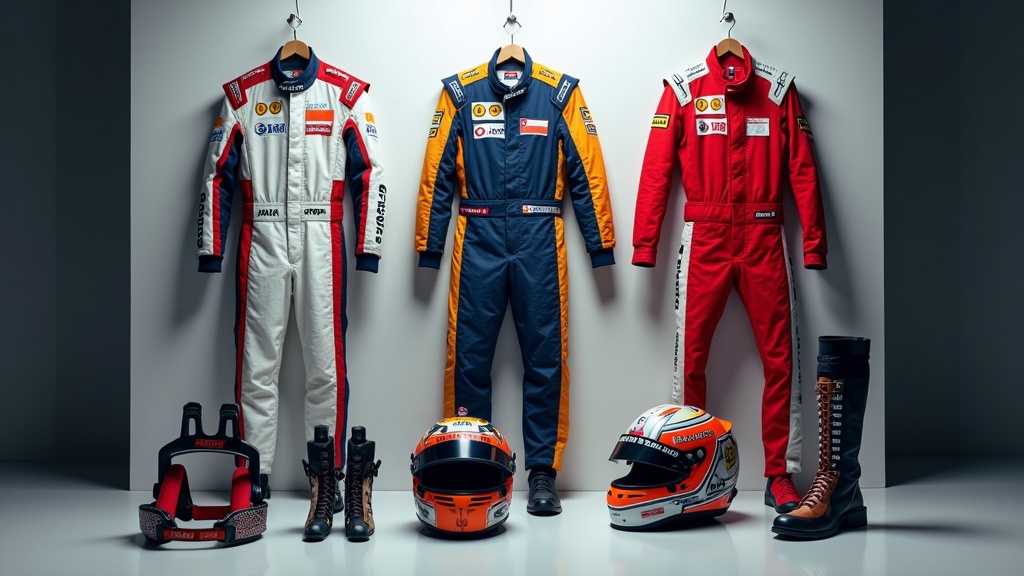
The racing suit is the most visible and arguably most important piece of safety equipment for a driver while racing. These are not merely fire-resistant coveralls; instead, they’re highly engineered combinations that offer several seconds of personal protection in an event of a fire. Many modern racing suits require multiple layers of specialized material to avoid flames, but they also must remain relatively light and flexible so drivers can control their vehicles without obstacles.
For anyone entering competitive motorsport, investing in quality FIA approved racing suits ensures compliance with competition regulations while providing proven protection. The FIA certification process tests suits rigorously for heat resistance, flame spread, and structural integrity, so that approval stamp means the suit has met demanding international standards.
Different competitions require different specifications, too—the more advanced the competition, the more highly-rated the suit needs to be. For example, basic testing standards may be acceptable for club racing at entry levels while national racing or international competitions would require more stringent regulations to be proven suitable. Therefore, checking levels for sanctioned competition helps avoid purchasing equipment that will not be accepted in competition later.
Head & Neck Protection
Helmets are a must within the world of motorsport. Alongside racing suits, they also need proper certification relative to levels of competition. Helmets appropriate for karting are not satisfactory for car racing and standards change over time as safety performance evolves. This also means helmets expire, not because they deteriorate (they can) but because regulations change and older certifications go by the wayside.
The HANS (Head and Neck Support) device is now required in most circuit racing forms as it’s a relatively cheap means by which to reduce serious neck and head injuries by preventing excessive forward movement during impacts. This works in tandem with helmets and seat belts to keep heads and necks in line with bodies when accidents occur.
Gloves, Boots, Underwear
Racing gloves protect hands from fire but must also allow for dexterity to control the vehicle speed. They cannot be so thick that drivers cannot tell how fast they’re steering but they also cannot be flimsy enough that they offer no protection whatsoever. Like most items, it takes time to find the perfect pair as some drivers go through many gloves before finding their favorite.
Racing boots protect feet and ankles from fire and impact but they also require substantial feel for accelerator/brake/clutch application. The soles must be thin enough that drivers can feel where they’re pushing/pulling without sacrificing speed and inadvertently communicating urgency to other drivers. For example, learning how much pressure is required when threshold braking or switching from gas to brake mid-action makes or breaks crash avoidance.
Fire-resistant underwear sounds frivolous but it’s an added layer of protection underneath the suit. For example, should a novice racer find themselves in a fire situation, their total protection time substantially increases with this extra layer.
Getting It Right
Safety equipment only works properly if there’s proper fit. A loose helmet can move upon impact rendering it less effective than if it had been secure. A tight racing suit impedes movement which makes it harder to reach controls or even escape the vehicle if need be. Ill-fitting boots compromise pedal feel while creating fatigue during longer races.
Most specialty retailers will fit each item purchased (and provide expertise on sizing). Therefore, taking advantage of these professional recommendations goes a long way—not only for individuals making their first purchase, but also, to ensure that everything fits as it should and operates properly. Some things should be tried on (helmets/suits) rather than purchased based upon sizing charts alone.
Taking It Over Time
Not everything should be purchased at once (and depends upon the type of racing one expects to engage with). Someone who’s entering into karting will have immediate different needs than someone who’s entering into touring cars. However, there are certain things like the suit/helmet/gloves/boots, that form a solid foundation all sub-disciplines require.
Quality safety equipment is an investment of considerable magnitude. But it’s one that protects across a lifetime of racing. Eventually, as skills develop and competition levels increase, some equipment will need upgrading due to regulations, but starting off on the right foot with correctly approved equipment ensures purposeful performance while allowing for early stages of progression in racing.